There are some common questions about this trek. I can try to answer these questions first.
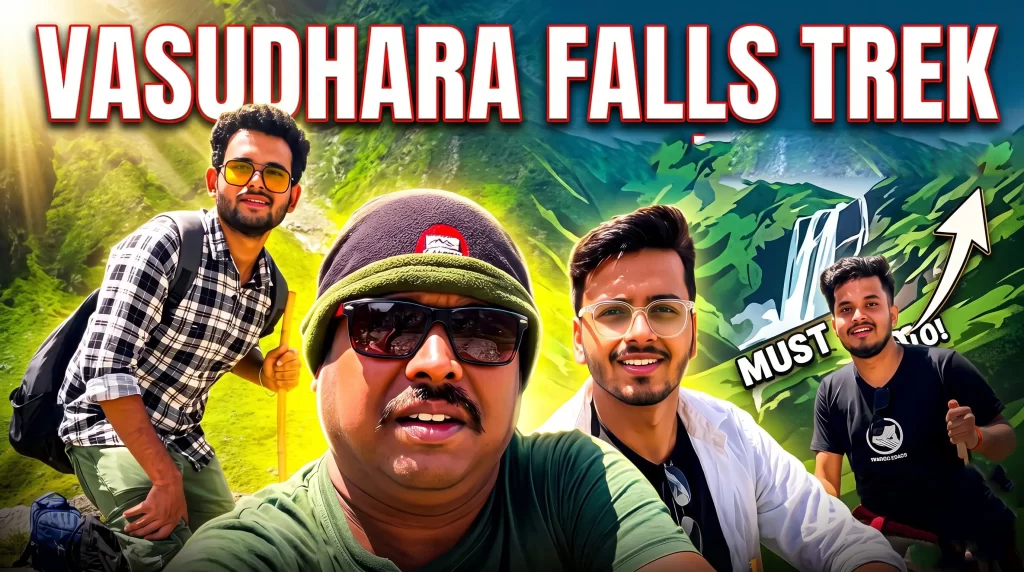
1. Q: How long is the Vasudhara Falls trek?
A: The trek is approximately 5 km one-way starting from Mana Village. It generally takes 2.5 to 3 hours to ascend and about 2 hours to hike back down, making it a 5-to-6-hour round trip.
2. Q: How difficult is the trek to Vasudhara Falls?
A: The trek is considered moderate to difficult. While the initial path past Ganesh Gufa and Bhim Pul is relatively flat and paved, the terrain becomes a steep, rocky, and narrow dirt trail for the last 3 kilometers. The high altitude (over 11,000 feet) also makes breathing more difficult during the steep climbs.
3. Q: What is the legend behind the water of Vasudhara Falls?
A: According to local Mahabharata lore, the falls lie on the path the Pandavas took to heaven (Swargarohini). It is a strong local belief that the cascading water will physically turn away and refuse to fall on anyone who harbors sin or impure thoughts.
4. Q: What is the best time to visit Vasudhara Falls?
The best time to visit is during the early summer (May to June) and post-monsoon autumn (September to October). The path is extremely dangerous and slippery during the July-August monsoons, and the entire region is closed off and buried in snow during the winter.
5. Q: Do I need a guide for this trek?
A: No, a guide is not necessary. The trail from Mana Village is well-defined, straightforward, and usually populated with other trekkers, pilgrims, and local nomadic shepherds.
6. Q: Are there food and water stalls along the way?
A: There are a few small, makeshift stalls selling water, tea, and basic snacks near the beginning of the trail and around the midway point. However, it is highly recommended to carry your own reusable water bottle and high-energy snacks (like dried fruit or chocolate), as options become scarce closer to the falls.
7. Q: Is the trek safe for elderly people or children?
A: Due to the steep, rocky inclines and the effects of high altitude, this trek is not recommended for the elderly, individuals with knee/heart problems, or very young children, unless they are exceptionally fit and accustomed to mountain trekking.
My brief experience as a tracker and blog maker:
As a documentary filmmaker shooting for National Videography, I’ve trekked across various historical routes, but the path from Mana Village to Vasudhara holds a uniquely raw energy. It is a trail where sheer physical endurance meets deep-rooted Mahabharata mythology. Here is what the trek actually looks and feels like on the ground.

The Vasudhara Falls trek is a 5-kilometer (one-way) trail starting from Mana Village near Badrinath, Uttarakhand. Taking about 3 hours to ascend, this moderate-to-difficult hike follows the mythical path of the Pandavas toward Swargarohini and rewards trekkers with a stunning 400-foot waterfall that freezes into mist before hitting the ground.
Quick Trek Stats
Starting Point: Mana Village (India’s Last/First Village)
Distance: ~5 km one-way
Time Taken: 3 hours up, 2 hours down
Difficulty: Moderate to Difficult (Steep, rocky inclines at high altitude)
Starting the Journey in Mana Village
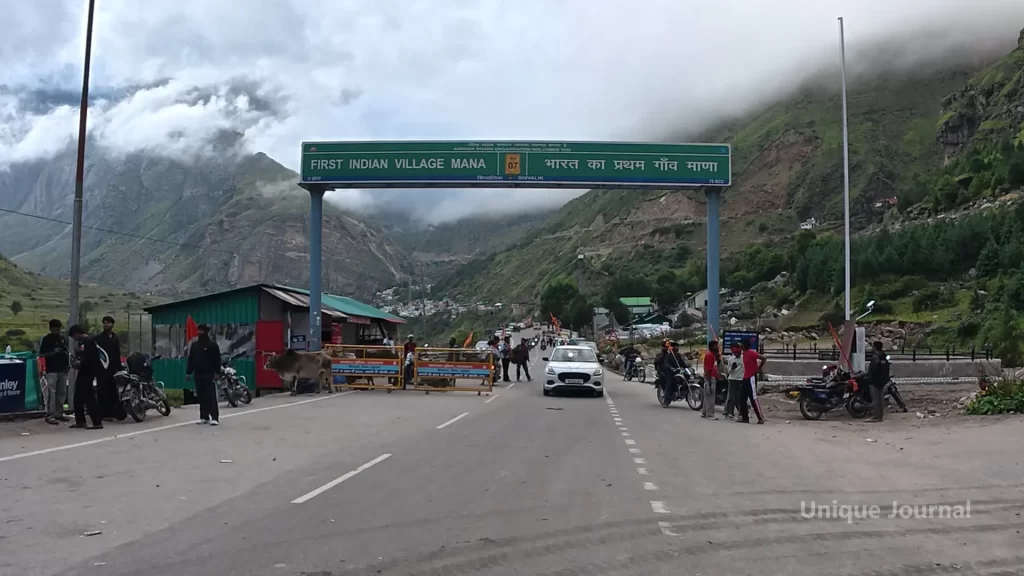
Before the steep inclines begin, the trek starts in Mana Village, situated right on the Indo-Tibet border. The village is alive with local culture. Before hitting the main trail, you’ll see local women hand-knitting traditional woolen topis (caps)—a meticulous process that takes up to six days for a single piece.
The initial stretch serves as a mythological checkpoint. A short walk brings you to Ganesh Gufa and Vyas Gufa, the sacred caves where sage Vyasa is said to have dictated the Mahabharata. Just below, the roaring Saraswati River bursts from the rocks, crossed via Bhim Pul—a massive natural stone bridge placed by Bhima himself.
The Reality of the 5km Climb
Once you cross Bhim Pul, the paved path quickly gives way to a rugged dirt trail. Make no mistake: while 5 kilometers might sound like a short walk, at an altitude of over 11,000 feet, it is a serious challenge.
The path opens up to a wind-swept valley with towering glaciers and a clear view of the Neelkanth peak in the distance. The terrain feels remarkably similar to the trails leading up to Muktinath in Nepal.
You won’t be alone on this path. The trail is shared with nomadic shepherds, local villagers carrying supplies, and pilgrims. Meeting fellow travelers—from Bengal to Ghaziabad—and exchanging chants of “Har Har Mahadev” provides the much-needed motivation when your legs start to give out.
The Final Ascent and The Falls
The final stretch is notoriously difficult. As one local on the trail accurately warned me, there is a specific section of moraine and steep rocks where the path is completely broken and exhausted legs (“paaye aar jor nei”) are pushed to their absolute limit.
But clearing that final ridge reveals the prize: Vasudhara Falls.
Dropping from an astonishing 400 feet (122 meters), the water crashes down with such force that it disperses into an icy mist long before it touches the rocks below. Standing beneath it, you understand why the local lore is so strong here. According to legend, these waters will physically turn away and refuse to fall on those harboring sin in their hearts. Whether you are there for the mythology or the raw geological beauty, standing soaked in the freezing mist of Vasudhara makes every agonizing step of that 3-hour climb worth it.
Filmmaker’s Pro-Tip: Start your trek early in the morning. By the time you reach the falls, the mountain winds become aggressively cold and strong. Carry your own water from the start, as the options disappear entirely as you get closer to the glacier.