
Tarapith Temple is a significant place of worship located in the Birbhum district of West Bengal, India. It holds great religious and cultural importance and is dedicated to the goddess Tara, a form of the Hindu goddess Kali. The story of the Tarapith Temple is rooted in ancient legends and is cherished by devotees who visit the temple seeking blessings and spiritual solace. in this article, we discuss the History of Temple Construction, Landmarks, Management Committee, and the Bhog Puja Method.
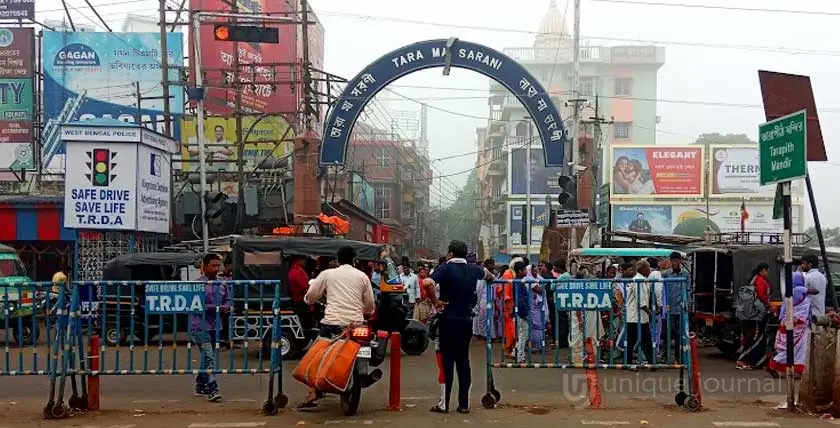
History of Tarapith Temple Construction, Landmarks, Management Committee, and Bhog Puja Method:
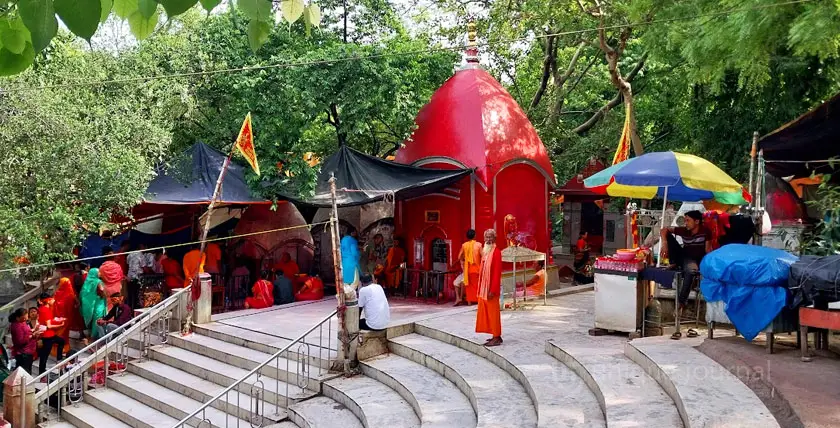
History Of Tarapith Temple: According to legend, the first temple of Tarama was built by Jay Datta Sawdagar, and the second temple by Tara-bhakta Som Ghosh. The temple of Tara-ma built by them in the cremation ground has been destroyed by the evolution of time, of which there is not even a trace today.
Construction:
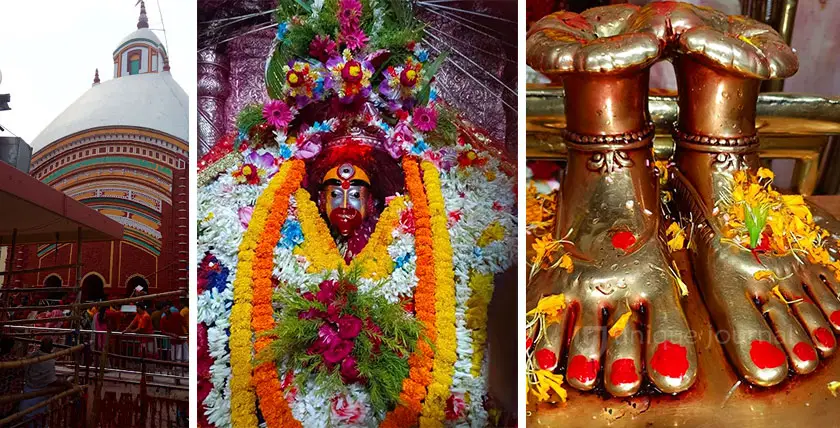
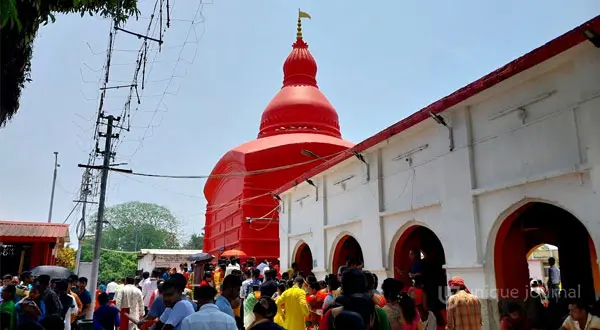
The Atchala temple is built of red bricks with sturdy inner walls, and its entrance faces to the north. A set of arched arches ascend to the top, with small peaks at each of the four corners above Charchala. On the top of the temple stands a trident adorned with a copper flag and pierced by three lotuses.
The central arch of the temple entrance features a portrait of Durga. On the north arch to the left of the temple, there are inscriptions depicting the events of the Kurukshetra conflict such as Bhishma’s defeat and the slaying of Ashwatthama. On the east side of the temple’s north wall, there are carvings of scenes from the abduction of Sita mata, the unusual time awakening of godies Durga, the battle of Rama and Ravana, as well as Krishna Leela. On the west side, there are engravings of scenes from Krishna’s childhood activity.
A three-foot-tall metal statue houses the original stone image of Mother Tara nursing the infant Shiva. Visitors typically come to see the metal statue, which is adorned with a silver crown and a silver umbrella above the idol’s head. The idol’s forehead is covered in vermilion, which the priests apply to visitors. Below the portrait idol, Golkar Bedi has two silver lotus feet. Devotees worship the goddess by offering coconuts, bananas, or silk sarees.
Management: Adjacent to the main temple, you can find a temple dedicated to a mother’s repose. Every year during autumn, on the day before Kojagari Lakshmi Puja, which falls on Shukla Chaturdashi and the full moon day, Shilamai Ma is worshipped at the repose temple while sitting on the west face. On this special day, Jayadatta Sadagar performed the first puja to the mother, giving rise to her appearance. In the past, a grand fair was held in celebration of this festival, but it has lost its popularity in recent times.
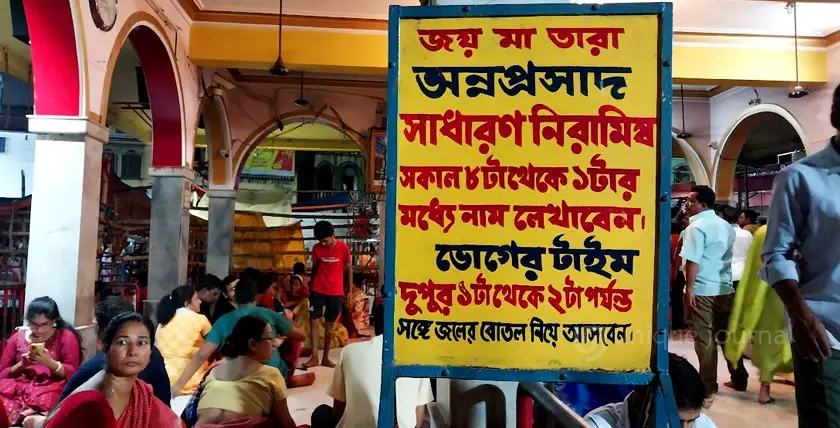
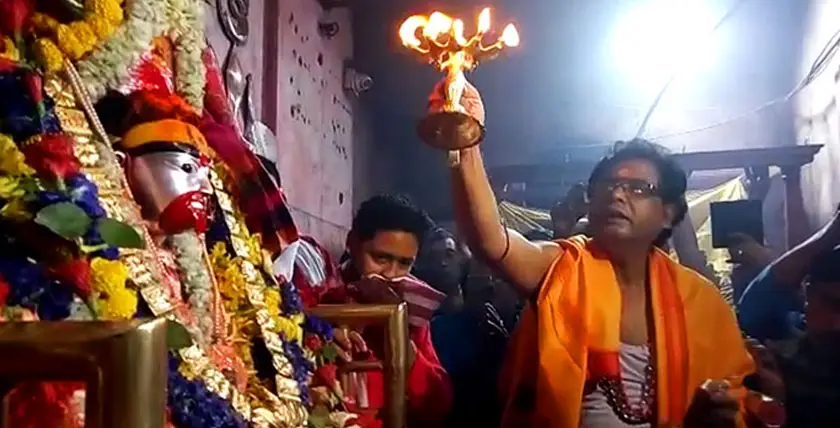
Bhog Puja Method: The Paladar Panda Temple opens every day at 4 in the morning. The Shilamoyi idol is first bathed with a variety of aromatic products and then adorned as the Dhyanmayi idol.
Ummant Singh, the zamindar of Nashipur in Murshidabad, constructed the mask and mundamala on this meditative idol.
Devotees begin their worship after the Mangalarti, and lunch is served between 12 pm and 1 pm. The evening prayer is followed by Adi Shilamayi Rup Darshan, and the temple closes at 10 pm.
On a lunar day (Ashtami, Chaturdashi, Purnima, Amavasya, and Sankranti ) on the two sides of the month, special puja aarti and Bhog are offered at night. If there is a special moment for worshiping the Mother at midnight or on the last night, the temple remains open all night.
Members of the Tara-mata temple development committee (Sevait Sangh) and Sevait pandas jointly conduct the renovation, development, maintenance, and orderly arrangement of pilgrims’ worship and maintenance of the temple.
To maintain the sanctity of the temple, smoking and drinking, wearing leather bags and belts, and carrying children are not allowed inside the sanctum sanctorum. Photographs of mothers cannot be taken without permission from the authorities.
Hi, this is a comment.
To get started with moderating, editing, and deleting comments, please visit the Comments screen in the dashboard.
Commenter avatars come from Gravatar.
Greate article. Keep posting such kind of info on your site. Im really impressed by your site. Hi there, You have done an excellent job. I’ll definitely digg it and individually suggest to my friends. I am sure they will be benefited from this web site.
Thank you
Do you mind if I quote a few of your articles as long as I provide credit and sources back to your website? My blog site is in the exact same area of interest as yours and my visitors would really benefit from a lot of the information you provide here.Please let me know if this ok with you. Regards!
Thank you for asking—that’s really appreciated!
Yes, you’re absolutely welcome to quote sections from the articles, as long as you clearly provide proper credit and include a link back to the original source on the website. That helps maintain transparency and also ensures readers can explore the full content.
I’m glad to hear your blog is in a similar space—sharing useful information benefits everyone. Wishing you all the best with your blog, and feel free to reach out anytime!
Hi there this is kind of of off topic but I
was wondering if blogs use WYSIWYG editors or if you
have to manually code with HTML. I’m starting a blog
soon but have no coding know-how so I wanted to get advice from
someone with experience. Any help would be greatly appreciated!
If you write a blog on WordPress, you won’t need to know any coding—thank you.
Hey I know this is off topic but I was wondering if you knew of any widgetsI could add to my blog that automatically tweet my newest twitter updates.
Thanks for your question! 😊 There are several widgets and plugins that can display your latest X (formerly Twitter) posts automatically. Depending on your blogging platform, you can use the official X embedded timeline or a social feed plugin that supports automatic updates. If you let me know whether your blog is on WordPress, Blogger, or another platform, I’d be happy to recommend the best option.