

Naina Devi Himalayan Bird Conservation Reserve – A Hidden Paradise for Bird Lovers
Nestled amidst the serene oak, pine, rhododendron, and deodar forests of the Kumaon Himalayas, Naina Devi Himalayan Bird Conservation Reserve is one of India’s finest birdwatching destinations. Located within the Nainital Forest Division in Uttarakhand, the reserve encompasses famous birding areas such as Kilbury, Pangot, Vinayak, and Naina Peak (Cheena Peak).
Although many visitors come to Nainital for its picturesque lake and bustling Mall Road, only a handful venture into these peaceful forests, where over 250 species of Himalayan birds have been recorded. The reserve offers an unforgettable experience for birdwatchers, wildlife photographers, trekkers, and nature enthusiasts seeking tranquility away from the crowds.
Whether you’re hoping to photograph a vibrant Yellow-billed Blue Magpie, listen to the haunting call of a Brown Wood Owl, or catch a rare glimpse of the elusive Cheer Pheasant, this reserve promises an extraordinary encounter with Himalayan biodiversity.
About Naina Devi Himalayan Bird Conservation Reserve
The Naina Devi Himalayan Bird Conservation Reserve was established to protect the rich avian diversity of the Kumaon Himalayas. Covering forests around Pangot, Kilbury, Vinayak, and Naina Peak, the reserve ranges from approximately 1,500 to over 2,600 metres above sea level. This variation in altitude creates diverse habitats that support a remarkable variety of bird species.
The reserve consists primarily of:
- Oak Forests
- Pine Forests
- Rhododendron Forests
- Mixed Himalayan Broadleaf Forests
- Mountain Streams
- Rocky Slopes
- Open Meadows
These habitats attract both resident and migratory birds throughout the year.
Besides birds, visitors may occasionally encounter:
- Himalayan Goral
- Barking Deer
- Leopard (rare and elusive)
- Yellow-throated Marten
- Himalayan Langur
- Numerous butterflies and insects
The peaceful forest roads, cool climate, and breathtaking Himalayan landscapes make this reserve one of Uttarakhand’s most rewarding eco-tourism destinations.
Why Birdwatchers Love This Reserve
Unlike many popular wildlife parks where visitors travel in noisy safari vehicles, Pangot offers a completely different experience.
Here, birdwatching means:
✔ Walking quietly through dense forests
✔ Listening carefully for bird calls
✔ Waiting patiently beside forest trails
✔ Photographing birds in their natural habitat
✔ Enjoying peaceful Himalayan mornings
Many professional bird photographers spend several days in Pangot simply because new species appear every morning.
Birdwatching in Naina Devi Himalayan Bird Conservation Reserve
The reserve is home to numerous Himalayan birds. Some are commonly observed, while others require patience, silence, and a little luck.
Below are some of the most fascinating species you may encounter.
1. Himalayan Griffon (Gyps himalayensis)
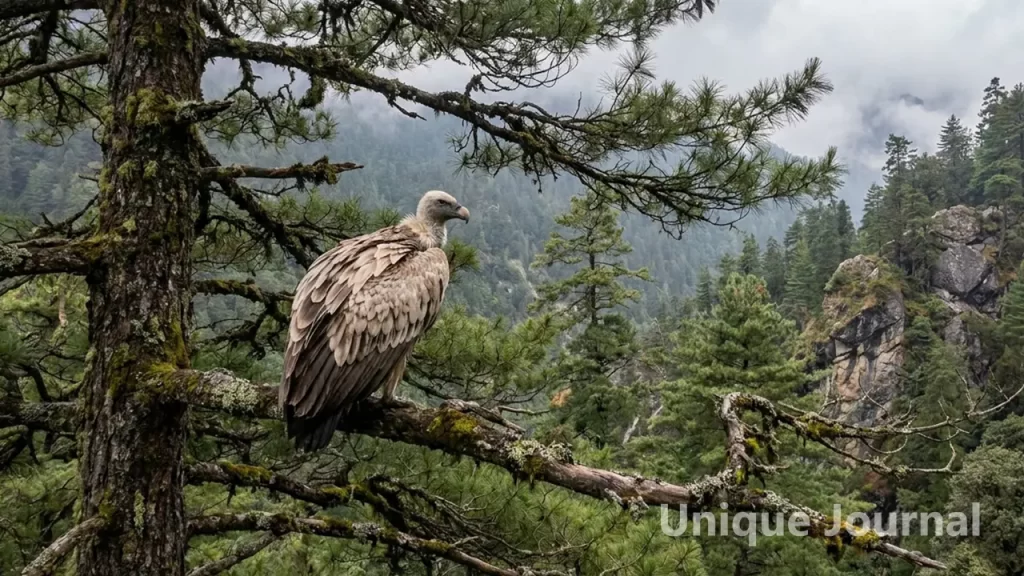
The Himalayan Griffon is one of the largest vultures in the world. With an impressive wingspan of nearly three metres, this majestic scavenger is often seen soaring effortlessly above the valleys and ridges surrounding Pangot.
Unlike hunting birds, Himalayan Griffons feed primarily on animal carcasses, playing a vital ecological role by cleaning the environment and preventing the spread of disease.
Identification
- Massive wingspan
- Pale cream body
- Dark flight feathers
- White neck ruff
- Broad soaring wings
Best Chance of Sighting
- Open ridges
- Mountain cliffs
- Naina Peak
- Kilbury hills
2. Koklass Pheasant (Pucrasia macrolopha)
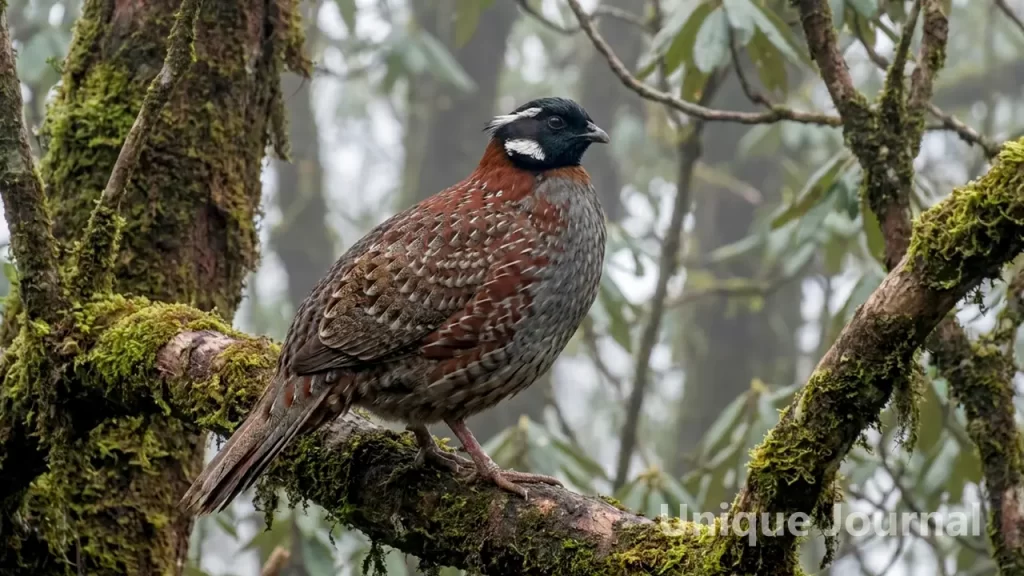
The Koklass Pheasant is one of the most sought-after birds in Uttarakhand. Although it is not brightly coloured like the Himalayan Monal, its beautifully patterned plumage makes it a favourite among birdwatchers.
This shy ground bird prefers dense oak and conifer forests where it remains well hidden.
Early mornings often provide the best opportunity to hear its distinctive call echoing through the forest.
Identification
Male:
- Grey head
- Black facial markings
- Chestnut wings
- Long tail
Female:
- Brown camouflage
- Excellent forest blending
Best Places
- Pangot forests
- Kilbury
- Vinayak Forest
3. Cheer Pheasant (Catreus wallichii) — A Rare Sighting
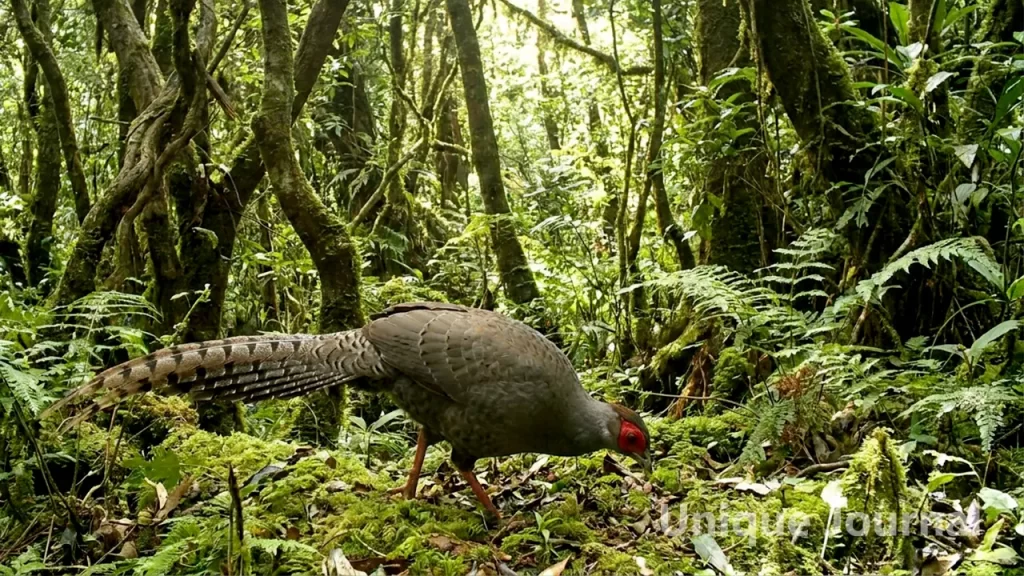
The Cheer Pheasant is among India’s rarest pheasants and is classified as Vulnerable by the IUCN. It inhabits steep grassy slopes mixed with scrub vegetation and is only occasionally observed in suitable habitats around the reserve.
Unlike other pheasants, the Cheer Pheasant spends much of its time on the ground, relying on camouflage to avoid predators.
Spotting one is considered a special achievement for experienced birdwatchers.
Interesting Fact
Many birders visit Pangot multiple times before finally seeing a Cheer Pheasant.
4. Yellow-billed Blue Magpie (Urocissa flavirostris)
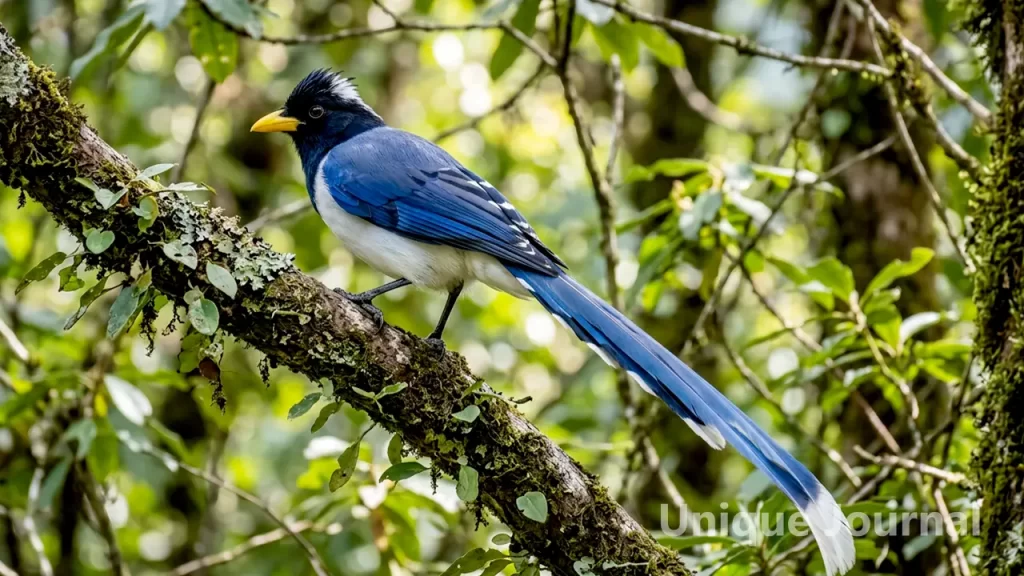
Perhaps the most photogenic bird in Pangot, the Yellow-billed Blue Magpie is impossible to ignore.
Its long blue tail, bright yellow bill, and elegant flight make it one of the stars of the reserve.
These highly intelligent birds often travel in noisy family groups and are commonly seen near villages, forest edges, and roads.
Identification
- Brilliant blue feathers
- Long graduated tail
- Bright yellow bill
- Black head
- White nape
Best Time
Early morning
Late afternoon
5. Rufous-bellied Woodpecker (Dendrocopos hyperythrus)
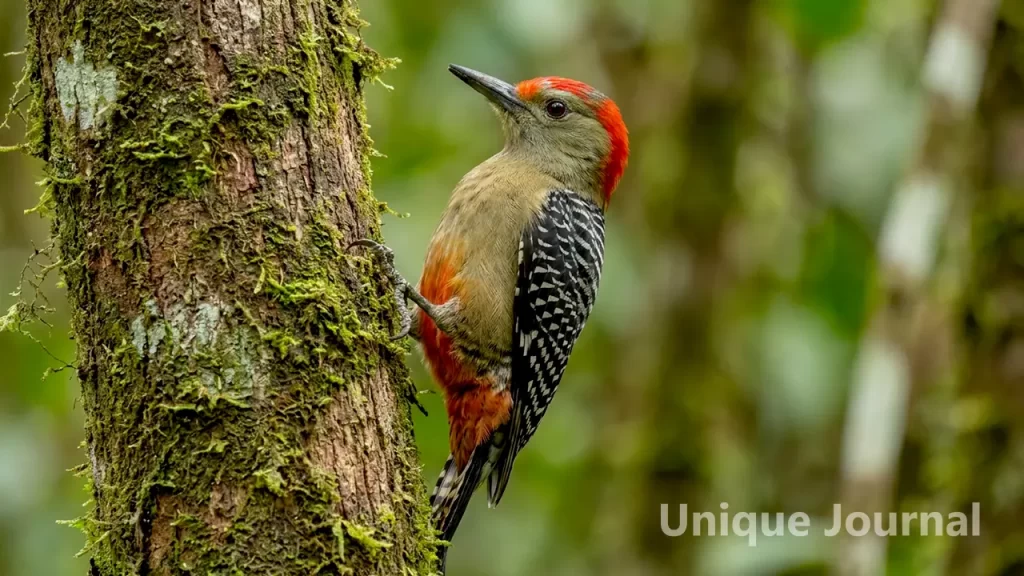
Hidden among towering oak trees, the Rufous-bellied Woodpecker is one of Pangot’s forest specialists.
It can usually be located by its rhythmic drumming on tree trunks rather than by sight.
Male birds possess a striking red crown, while both sexes display beautifully patterned black-and-white upperparts with a rich rufous belly.
Photographers often wait patiently near old trees for the perfect opportunity.
6. Brown Wood Owl (Strix leptogrammica)
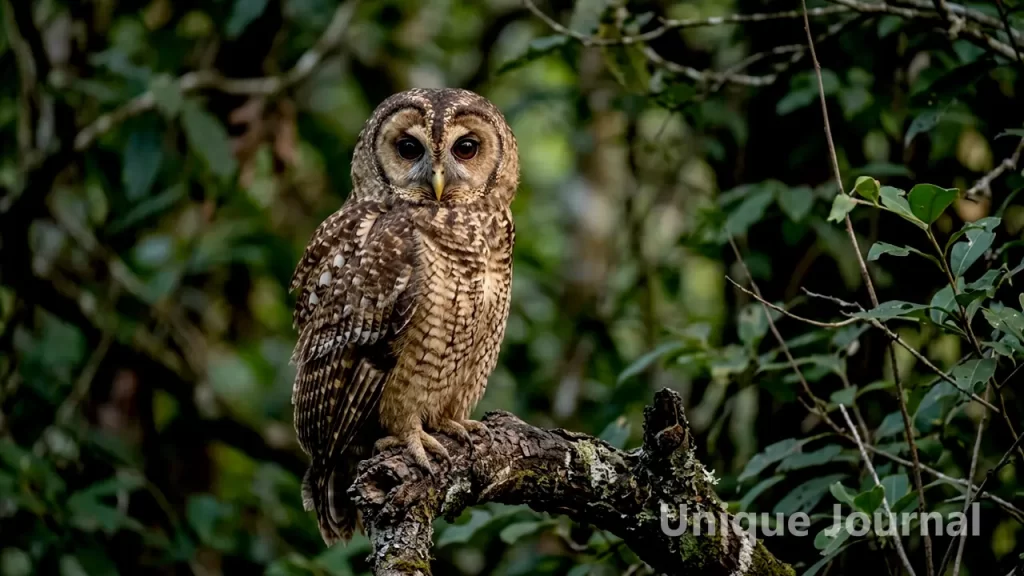
The Brown Wood Owl is one of the reserve’s most mysterious residents.
Being nocturnal, it spends the daytime resting quietly inside dense forest canopies.
At dusk, its deep haunting calls echo through the Himalayan forest, creating an unforgettable atmosphere.
Although difficult to photograph, hearing this magnificent owl is an experience in itself.
7. Black-headed Jay (Garrulus lanceolatus)
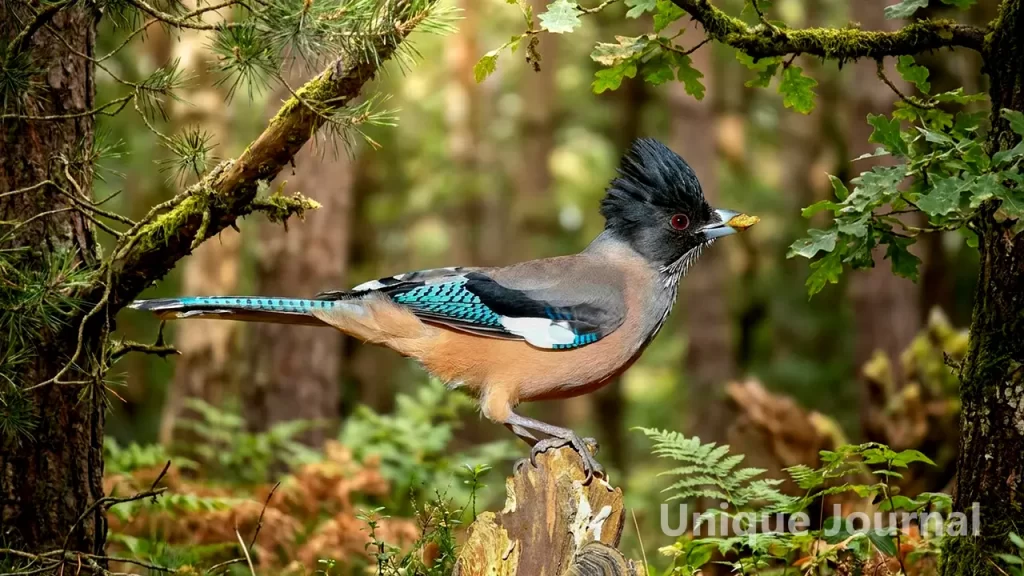
Endemic to the Himalayas, the Black-headed Jay is energetic, intelligent, and remarkably curious.
It frequently moves through oak forests in small family groups while searching for insects, seeds, berries, and acorns.
Its loud calls often alert birdwatchers to its presence before it becomes visible.
8. White-throated Laughingthrush (Pterorhinus albogularis)
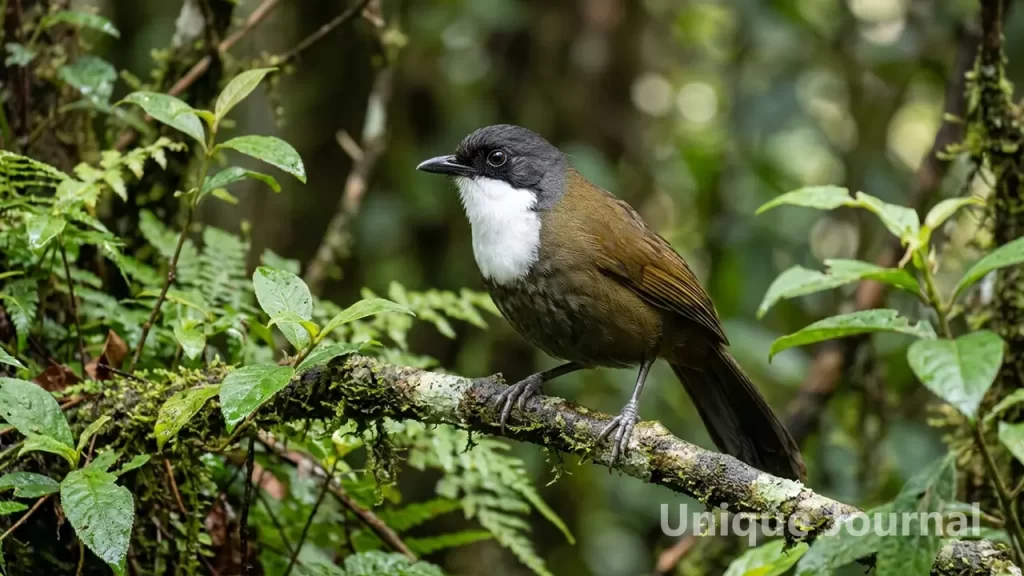
One of the liveliest birds of Pangot, the White-throated Laughingthrush rarely stays still.
Travelling in noisy flocks, these birds forage together among shrubs and leaf litter.
Their constant chatter fills the forest with cheerful sounds, making them one of the easiest birds to identify by voice.
Best Birdwatching Spots in Naina Devi Himalayan Bird Conservation Reserve
The forests around Pangot are considered among the finest birdwatching destinations in the Himalayas. Every trail offers a unique habitat and a different collection of birds.
1. Kilbury Bird Sanctuary
Located about 12 km from Nainital, Kilbury Bird Sanctuary is the most famous birding destination within the Naina Devi Himalayan Bird Conservation Reserve. Surrounded by dense oak, pine, and rhododendron forests, it provides a peaceful environment where birdwatchers can spend hours observing Himalayan birdlife.
The sanctuary is home to more than 250 recorded bird species, making it one of Uttarakhand’s richest bird habitats.
Birds commonly seen
- Yellow-billed Blue Magpie
- Black-headed Jay
- White-throated Laughingthrush
- Rufous-bellied Woodpecker
- Grey-headed Woodpecker
- Himalayan Griffon
- Green-backed Tit
- Bar-tailed Treecreeper
Why Visit?
- Excellent bird photography
- Quiet forest roads
- Beautiful Himalayan scenery
- Ideal for beginners and professional birders
2. Vinayak Forest
The Vinayak Forest Trail connects Pangot with Naina Peak and is one of the most rewarding forest walks in the region.
Unlike Kilbury, Vinayak Forest is less crowded and offers an authentic Himalayan jungle experience. Dense oak trees, moss-covered rocks, and hidden streams create ideal habitats for many elusive birds.
Birds Found Here
- Koklass Pheasant
- White-throated Laughingthrush
- Brown Wood Owl
- Rufous-bellied Woodpecker
- Himalayan Griffon
Photography Tips
Early morning light filtering through the oak forest creates excellent conditions for wildlife photography.
3. Cheena Peak (Naina Peak)
At 2,615 metres, Naina Peak is the highest point in Nainital.
The trek passes through pristine forests before opening to breathtaking views of the snow-covered Himalayan range. Besides panoramic landscapes, the area is also excellent for spotting raptors and high-altitude birds.
Birds You May Spot
- Himalayan Griffon
- Black-headed Jay
- Yellow-billed Blue Magpie
- Mountain Hawk-Eagle
- Various Himalayan songbirds
Highlights
✔ Highest viewpoint in Nainital
✔ Snow peaks visible on clear days
✔ Excellent sunrise photography
4. Woodpecker Point
A favourite among bird photographers, this lesser-known location has earned its name because several woodpecker species are frequently observed here.
Large old oak trees provide ideal nesting sites, making it one of the best places to patiently observe these fascinating birds.
Species Often Seen
- Rufous-bellied Woodpecker
- Grey-headed Woodpecker
- Himalayan Woodpecker
- Greater Yellownape
If you enjoy bird photography, carry a telephoto lens and remain silent for the best opportunities.
Best Time for Birdwatching
Spring (March – June)
⭐⭐⭐⭐⭐ Recommended
This is considered the finest birdwatching season.
During spring:
- Forests become lush and colourful.
- Birds begin breeding.
- Males display bright breeding plumage.
- Birdsong fills the forests.
- Excellent opportunities for photography.
Temperature ranges between 10°C and 22°C, making trekking comfortable.
Autumn (October – November)
⭐⭐⭐⭐⭐ Excellent
Autumn offers:
- Clear blue skies
- Pleasant weather
- High visibility
- Colourful forest landscapes
- Active resident birds
Professional photographers particularly love this season because of the soft golden light.
Monsoon (July – September)
⭐⭐⭐ Moderate
Heavy rainfall makes trekking difficult.
Many forest trails become slippery.
Photography can also be challenging due to cloud cover.
However, the forests become incredibly green.
Winter (December – February)
⭐⭐⭐⭐ Good
Cold mornings often produce beautiful misty landscapes.
Some high-altitude birds descend to lower elevations.
Carry warm clothing as temperatures can drop below freezing at night.
Bird Photography Tips
If you’re visiting Pangot primarily for bird photography, consider the following tips:
Carry a Telephoto Lens
A lens of 300–600 mm is ideal for photographing birds without disturbing them.
Start Before Sunrise
Bird activity is highest between 6:00 AM and 9:00 AM.
Wear Earth-Coloured Clothing
Avoid bright colours that may frighten birds.
Walk Slowly
Birdwatching is about patience rather than speed.
Listen Carefully
Many birds are heard before they are seen.
Stay Silent
Avoid loud conversations while walking through the forest.
Watch this Video and Plan your Pangot Trip
Are you rady to Nex lavel adventure in your Pangot Trip?
if your answar is Yes – you may trek 2 km. -destination is ” Ghaniyal Devi Temple”
Ghaniyal Devi Temple & Trek – Pangot's Hidden Spiritual Gem

Hidden deep within the forests near Pangot lies the peaceful Ghaniyal Devi Temple, a revered shrine dedicated to Goddess Ghaniyal Devi, who is regarded by local communities as the protector of forests, wildlife, and villages.
Unlike many famous temples in Uttarakhand, Ghaniyal Devi Temple remains largely untouched by commercial tourism. The journey to the temple is as rewarding as the destination itself, taking visitors through dense oak and pine forests, mountain trails, and serene Himalayan landscapes. Along the way, trekkers often encounter colorful birds, butterflies, and panoramic viewpoints, making the trek a unique blend of spirituality and nature.
Note: You may come across social media videos describing this as “the temple where everyone is a millionaire.” This is a popular storytelling phrase rather than a documented historical or religious belief. It’s best to present it as a local anecdote instead of a verified fact.
Trek Highlights
- Trek through beautiful Himalayan forests
- Scenic views of the surrounding valleys
- Excellent opportunities for birdwatching
- Peaceful atmosphere away from crowded tourist spots
- Ideal for nature lovers, photographers, and trekkers
Trek Information
| Details | Information |
|---|---|
| Trek Difficulty | Easy to Moderate |
| Trek Distance | Approximately 2-3 km (depending on the starting point) |
| Duration | 2–3 hours (round trip) |
| Best Time | March–June & October–November |
| Guide Required | Recommended if unfamiliar with the trail |
The temple is a wonderful stop for visitors seeking a quieter, more immersive experience of Pangot beyond its famous birdwatching trails.
Pangot Tour from Kolkata
Pangot is becoming increasingly popular among birdwatchers and photographers from Eastern India.
By Train
Take a train from Howrah or Sealdah to Kathgodam Railway Station, the nearest railhead for Pangot.
Popular options include:
- Bagh Express
- Kolkata–Kathgodam Express (seasonal availability may vary)
From Kathgodam:
- Hire a taxi to Pangot (approximately 45 km, 1.5–2 hours)
By Flight
Fly from Kolkata to Pantnagar Airport (usually via Delhi).
Then drive to Pangot.
Approximate travel time from the airport: 3–4 hours.
Suggested 5-Day Itinerary from Kolkata
Day 1
Kolkata → Kathgodam / Pantnagar
Overnight stay in Nainital or Pangot
Day 2
Kilbury Bird Sanctuary
Pangot Village
Bird Photography
Day 3
Vinayak Forest
Naina Peak Trek
Ghaniyal Devi Temple
Day 4
Nainital sightseeing
Naini Lake
Mall Road
Snow View Point
Day 5
Return journey
Pangot Tour from Delhi
Pangot is one of the best weekend destinations from Delhi.
Distance
Approximately 320 km
Driving Time
7–8 hours
Route
Delhi
↓
Haldwani
↓
Kathgodam
↓
Nainital
↓
Pangot
2-Day Itinerary from Delhi
Day 1
Leave Delhi around 6 AM.
Breakfast at Haldwani.
Drive through Nainital to Pangot.
Check into your hotel.
Evening birdwatching.
Sunset photography.
Day 2
Early morning birdwatching.
Visit Kilbury.
Trek to Naina Peak.
Lunch.
Return to Delhi.
Pangot Tour from Nainital
Pangot is only 15 km from Nainital.
Driving Time:
Approximately 40–45 minutes.
Perfect for:
- One-day trip
- Weekend getaway
- Birdwatching
- Photography
One-Day Itinerary
7:00 AM
Leave Nainital
↓
Kilbury Bird Sanctuary
↓
Bird Photography
↓
Pangot Village
↓
Lunch
↓
Vinayak Forest
↓
Sunset
↓
Return to Nainital
Frequently Asked Questions (FAQs)
Is Pangot good for birdwatching?
Yes. Pangot is one of India’s premier birdwatching destinations, with over 250 recorded bird species.
How far is Pangot from Nainital?
Approximately 15 km, taking around 40–45 minutes by road.
Which is the best month to visit Pangot?
March–June and October–November are considered the best months for birdwatching, trekking, and photography.
Is Pangot suitable for family trips?
Yes. Families, birdwatchers, photographers, trekkers, and nature lovers all enjoy Pangot’s peaceful environment.
Can beginners enjoy birdwatching in Pangot?
Absolutely. Guided bird walks and the abundance of common Himalayan birds make it an excellent destination for first-time birdwatchers.
Final Thoughts
Whether you’re an avid birder hoping to spot the elusive Cheer Pheasant, a photographer chasing the vibrant Yellow-billed Blue Magpie, or a traveller looking to escape into the serene forests of Uttarakhand, Naina Devi Himalayan Bird Conservation Reserve and Pangot offer an unforgettable Himalayan experience.
From tranquil forest trails and breathtaking viewpoints to rich birdlife and peaceful village stays, this hidden gem showcases the natural beauty of the Kumaon Himalayas. A journey here is not just about ticking off bird species—it’s about slowing down, listening to the sounds of the forest, and reconnecting with nature.
For travel inquary please contact
WhatsApp: +91 7003375604 / 6289632488

